Fed decision week: how volatility hits your crypto card spending
Based on verified official data as of 27.07.2026; hands-on update coming.
When macro events like a Fed rate decision hit, crypto cards that convert your balance at the moment of purchase expose you to intraday swings. As of 27 July 2026 Bitcoin is holding near $64K and the FOMC meets Wednesday with forward guidance now scrapped, so two-way moves are likely all week. The practical defence is simple: fund your card from a stablecoin balance (USDT/USDC), not from volatile assets, so the price you see is the price you pay. Keep only what you plan to spend on the card and park the rest in a flexible earn product.
TL;DR
- Bitcoin is holding around $64K into the 24-27 July window; the Fed decision lands Wednesday with no forward guidance to steer markets.
- Cards that convert crypto at swipe time pass intraday volatility straight to your purchase price - a stablecoin balance removes that risk.
- US-Iran de-escalation on 24 July let oil fall below $90, easing one inflation pressure ahead of the FOMC vote.
- Big-tech earnings land the same week as the Fed decision, stacking two-way volatility triggers on top of each other.
- Load your card in small tranches during volatile weeks; keep the rest in a flexible earn product paying 4-6.5% APR.
Why a Fed week matters for a crypto card holder
A crypto card is not just a spending tool; it is a live position in whatever asset funds it. Many cards convert your balance to fiat at the instant of purchase. If that balance is Bitcoin or ETH and the market swings 3-5% in a day, the same coffee can cost you more or less depending on when you tap the terminal.
This week the trigger is the FOMC meeting on Wednesday. Per the DOUBLETOP market note dated 27 July 2026, the probability of a hike has eased slightly but the outcome is still unclear. Forward guidance has been dropped, so the market is moving without the usual soft signalling from the Fed.
That uncertainty is compounded by big-tech earnings landing the same week. Two independent volatility triggers in a few days means sharp moves in both directions should be treated as normal, not as a signal to time the top.
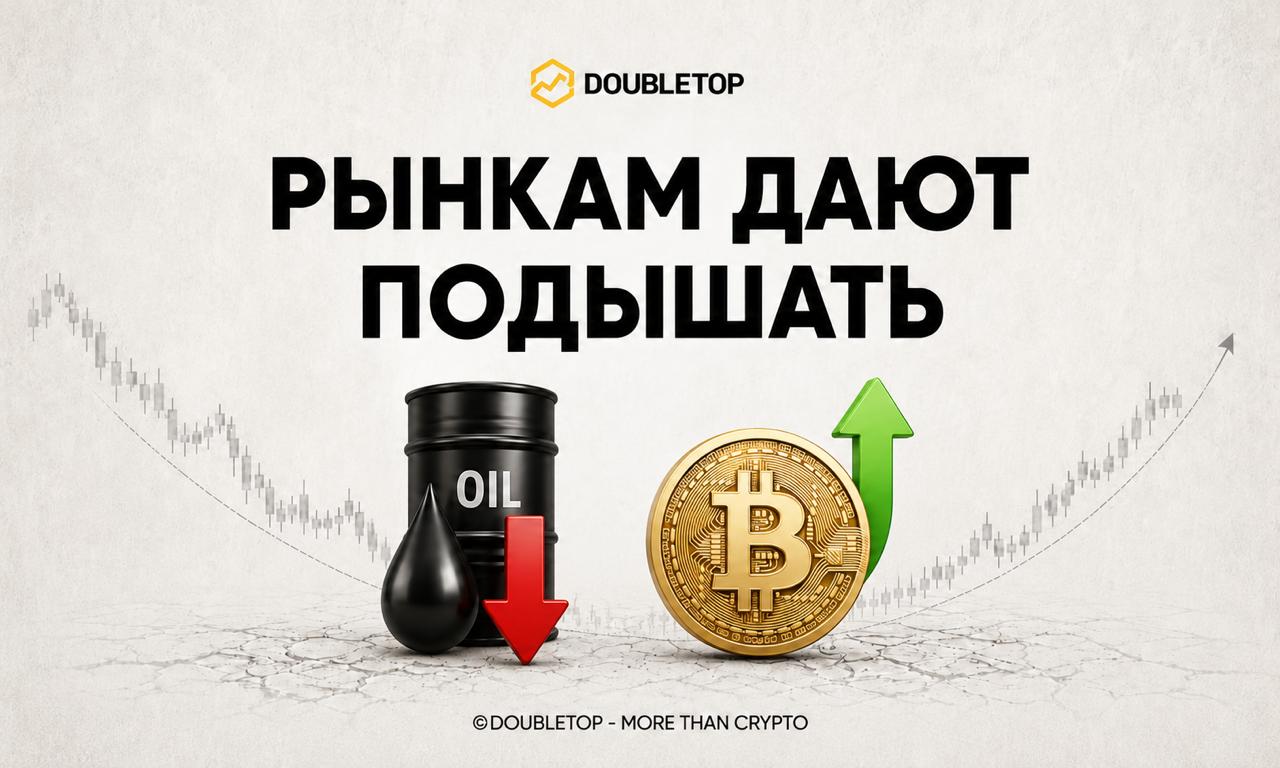
“Рынкам дают подышать перед решением ФРС? 🤝 Выходные для рынков прошли достаточно спокойно и мы даже получили деэскалацию в конфликте США и Ирана, что дало битку возможность удержать $64К, а нефти упасть ниже $90. После почти двух недель ударов США 24 июля взяли паузу, Иран в ответ тоже остановил атаки и предупредил, что вернётся к ним, если США выйдут из паузы. Но проблема никуда не делась, хуситы продолжают бить по объектам и судам, связанным с Саудовской Аравией. 🤓При этом, вся геополитика сильно связана с решением ФРС, которое будет уже в эту среду. Пусть вероятность повышения ставки немн”
The macro backdrop as of 27 July 2026
The weekend was relatively calm for markets. A de-escalation between the US and Iran on 24 July, after nearly two weeks of strikes, gave Bitcoin room to hold the $64K level and let oil fall below $90. Iran paused its own attacks and warned it would resume if the US exits the pause.
The problem has not gone away. Houthi forces continue to strike targets and vessels linked to Saudi Arabia, which keeps an energy-price risk premium alive. Expensive energy pushes on inflation, while a resilient US economy gives the Fed a reason not to cut. Those two forces pull the rate decision in opposite directions.
None of this is a price forecast. It is context for why your card balance could move materially between the day you load it and the day you spend it.
| Factor | Reading as of 27 Jul 2026 | Direction of pressure |
|---|---|---|
| Bitcoin | Holding near $64K | Neutral, awaiting FOMC |
| Crude oil | Below $90 after de-escalation | Eases inflation pressure |
| US-Iran conflict | Paused since 24 July, fragile | Two-way risk |
| Fed forward guidance | Scrapped | Higher volatility |
| Big-tech earnings | Reporting same week | Adds two-way swings |
Stablecoin buffer: the cheapest hedge you already have
The simplest way to strip volatility from card spending is to fund the card from a stablecoin balance rather than from BTC or ETH. When the card debits USDT or USDC one-for-one, the FOMC outcome does not change what your groceries cost. You still carry issuer conversion and network fees, but not price risk.
Convert the amount you plan to spend into stablecoins before the volatile window, not during it. If you convert BTC to USDT after a sharp move, you have locked in that move. Doing it in calmer periods, or in small regular tranches, smooths the entry price.
Keep the rest of your balance in a flexible earn product. Verified base rates as of mid-2026 sit around 4-6.5% APR on USDT with no lockup, so idle buffer money is not dead money. See our earn-rate notes for current figures before relying on any headline rate.
Practical card rules for a volatile week
Load small, load often. Instead of topping up a month of spending in one transaction, move a week at a time. This caps how much of your balance is exposed to any single Fed-driven swing and keeps unspent funds earning yield elsewhere.
Batch your ATM withdrawals. Card-side ATM fees run about 1.5-2% plus a flat local operator charge, so fewer larger withdrawals cost less than many small ones. On a volatile week this also limits how often you are forced to convert at a bad moment.
Check whether your card converts at authorisation or at settlement. Some issuers lock the rate when you tap; others settle a day or two later at a different price. During an FOMC week that lag can work for or against you, and our KYC friction ranking notes which issuers publish their conversion timing.
What this guide is not
This is not trading advice and not a prediction of the Fed outcome or Bitcoin's next move. The point is defensive: reduce the chance that a macro headline changes what you pay at the till.
If you spend entirely from a fiat-loaded card or already run a stablecoin balance, most of this volatility risk does not apply to you. The guidance matters most for holders who fund cards directly from volatile crypto and spend during high-news weeks.
Risk warning: derivatives and crypto-backed credit involve significant risk, including liquidation of your collateral. Never commit funds you cannot afford to lose. Nothing on this page is financial, investment or tax advice.
Who this is NOT for
- Traders looking for a directional call on the Fed decision or Bitcoin price - this is a spending-risk guide, not a forecast.
- People who already fund cards from a fiat or stablecoin balance and carry no price exposure at swipe time.
- Anyone needing region-specific tax or regulatory advice on crypto card use.
- Holders who want to time conversions for profit rather than reduce spending risk.
Frequently asked questions
If your card converts crypto to fiat at the moment of purchase, any price swing driven by the FOMC outcome changes your effective cost. Funding from a stablecoin balance removes that link, since the debit is one-for-one.
NomadCrypto Editor
Editorial Team, NomadCard
The NomadCrypto editorial team verifies every published fee across 59 crypto cards against issuer documentation, with the verification date shown on every figure.