Fed holds at 3.50-3.75%: what a higher-for-longer rate means for crypto card users
Based on verified official data as of 27.07.2026; hands-on update coming.
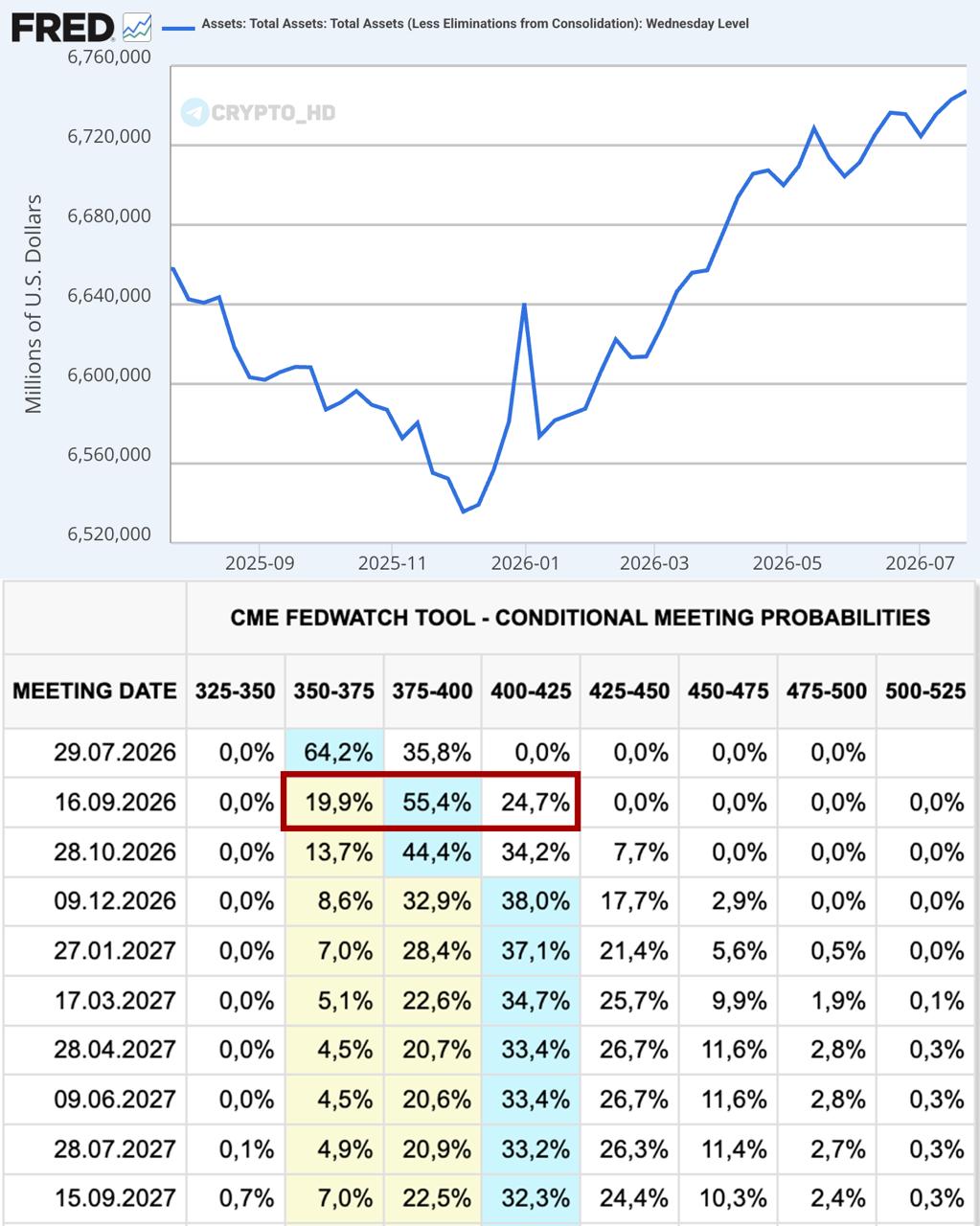
Ahead of the 29 July 2026 FOMC meeting, most economists surveyed by Reuters expect the Fed to hold its benchmark at 3.50-3.75%, while markets now price a September hike to 3.75-4.00% and the WSJ puts odds of a July hike near one third. For crypto card users this matters two ways: higher-for-longer rates keep USD-stablecoin earn yields elevated (Bybit pays 6.56% APR on USDT as of 20 July 2026), and a stronger dollar raises the local-currency cost of spending a USD-denominated balance abroad. Nothing changes about card mechanics; only the yield on parked balances and the FX backdrop move.
TL;DR
- Reuters survey: most economists expect the Fed to hold at 3.50-3.75% on 29 July 2026; markets price a 25bp hike to 3.75-4.00% on 16 September.
- WSJ puts the odds of a hike at the 29 July meeting at roughly one third; JPMorgan sees no change until at least September 2027.
- Higher-for-longer rates keep USD stablecoin earn yields elevated - Bybit's USDT flexible rate was 6.56% APR on 20 July 2026.
- A firmer dollar raises the local-currency cost of spending a USD-pegged card balance abroad, independent of card FX fees.
- Fed decisions do not change card conversion or ATM mechanics; they move the yield on what you park and the FX backdrop only.
What the 29 July decision is expected to be
The Federal Reserve enters its pre-meeting blackout period with the FOMC decision due 29 July 2026. According to a Reuters survey, most economists expect the benchmark to stay at 3.50-3.75%. The probability of a hike before year-end has risen noticeably, driven by higher oil prices and sticky inflation that the same survey says practically rules out any cut in 2026.
Bank forecasts diverge on the tone rather than the July number. Barclays expects a hold but will not rule out hawkish language over energy risks. JPMorgan sees no move until at least September 2027, and even then guesses the first change could be a 25bp hike. Morgan Stanley also expects a hold, arguing that cooling inflation avoids the need to tighten despite market pricing.
The Wall Street Journal describes the outcome as less predictable than usual, putting the chance of a hike at the July meeting at roughly one third. Treat all of these as forecasts, not facts: the decision itself lands on 29 July and the statement wording will matter as much as the number.
| Source | July 2026 call | Notes |
|---|---|---|
| Reuters survey | Hold at 3.50-3.75% | Cut in 2026 nearly ruled out on oil and inflation |
| WSJ | ~1/3 chance of a hike | Outcome less predictable than usual |
| Barclays | Hold | Hawkish tone possible over energy risks |
| JPMorgan | Hold | First move not seen until Sept 2027, possibly a hike |
| Morgan Stanley | Hold | Cooling inflation avoids the need to tighten |
| Market pricing | Pause July, +25bp 16 Sept | September hike to 3.75-4.00% |
Why a rate hold matters to a crypto card user at all
Most people spending crypto through a debit or prepaid card never look at the FOMC calendar, and for the card mechanics they are right not to. Conversion fees, ATM charges and monthly caps are set by the issuer, not the Fed. A rate hold does not change any line item on your card statement.
Two indirect channels do matter. First, the interest you earn on the stablecoin balance you have not yet spent tracks the general USD rate environment. A higher-for-longer Fed keeps flexible USD-stablecoin yields elevated instead of drifting down. Second, the dollar's strength affects how far a USD-pegged balance stretches in local currency terms.
Neither channel is a reason to change cards. But if you keep a float in USDT or USDC between top-ups, the rate backdrop determines whether that float earns 6% or something closer to nothing, and that compounds over a year of monthly salaries.
The earn-yield channel: what higher rates do to your parked balance
Flexible earn products on major exchanges pay daily-accruing interest with no lockup. Their rates loosely follow the USD rate environment, so a Fed that holds or hikes tends to keep these yields firm rather than letting them fall. As of 20 July 2026, Bybit Easy Earn paid 6.56% APR on USDT and 4.00% on USDC; OKX Earn listed USDC at 5.62% APY on its EU site.
For a card user, the practical move is unchanged by the FOMC decision: park the balance you have not yet spent in a flexible product so it earns while it waits. On an average parked balance of $1,000, 6.56% APR is worth roughly $5.50 a month, which offsets a meaningful share of card conversion and ATM costs.
Do not chase the highest advertised rate blindly. Nexo advertises up to 13% p.a., but that headline applies to specific assets and requires a $5,000+ portfolio to accrue. Read tier terms before assuming the top number applies to your USDT.
| Platform | Asset | Rate | Conditions |
|---|---|---|---|
| Bybit Easy Earn | USDT | 6.56% APR | Flexible base rate, promo excluded (20 Jul 2026) |
| Bybit Easy Earn | USDC | 4.00% APR | Flexible base rate |
| OKX Earn | USDC | 5.62% APY | EU site; unavailable in some EEA regions |
| Nexo Flexible Savings | Up to 13% on DOT | Up to 13% p.a. | Requires $5,000+ portfolio to accrue |
The FX channel: a stronger dollar costs you at the till
Most crypto cards settle a USD-denominated balance (USDT or USDC) into the local currency at the point of sale. That conversion happens at the network rate plus the issuer's card FX margin. The Fed does not set that margin, but it does influence the underlying exchange rate through the dollar's strength.
A higher-for-longer Fed tends to support the dollar against many currencies. If you hold USDT and spend in euros, pesos or lira, a stronger dollar means each USDT buys more local currency, which works in your favour. If you earn in a weaker local currency and top up in USD stablecoins, the same move makes topping up more expensive.
This is a backdrop, not a fee you can shop around. The controllable cost is still the card's conversion margin, which ranges from 0% to about 1% on the best cards in our database. Pick the low-margin card first; treat the FX backdrop as context, not a lever you control.
What actually changes for you on 29 July
In practical terms, very little changes on decision day itself. Your card keeps working, your conversion fee is unchanged, and your earn yield does not reprice overnight because of one statement. The value of watching the FOMC is directional: it tells you whether the yield on parked stablecoins is likely to stay firm or start falling.
If the Fed holds and signals higher-for-longer, the sensible posture is unchanged from our salary-to-cash guidance: keep spending money on a low-margin card, park the rest in a flexible earn product, and withdraw cash in fewer, larger batches to spread flat ATM operator fees.
If a surprise hike lands, expect the dollar to firm and yields to stay high, both mildly positive for someone holding USD stablecoins. A surprise dovish shift would be the opposite. Either way, no card action is required on the day.
Risk warning: derivatives and crypto-backed credit involve significant risk, including liquidation of your collateral. Never commit funds you cannot afford to lose. Nothing on this page is financial, investment or tax advice.
Who this is NOT for
- Traders looking for a rate-based crypto price forecast - this covers card and earn mechanics, not price direction.
- Anyone expecting card fees to change because of a Fed decision; conversion and ATM costs are set by issuers.
- Users who never hold a stablecoin float between top-ups, since the earn-yield channel does not apply to them.
- People in EEA regions where some earn products cited here are unavailable.
Frequently asked questions
No. Conversion margins, ATM fees and caps are set by the card issuer, not the Fed. A rate decision changes the yield on parked stablecoins and the FX backdrop, not any line on your card statement.
NomadCrypto Editor
Editorial Team, NomadCard
The NomadCrypto editorial team verifies every published fee across 59 crypto cards against issuer documentation, with the verification date shown on every figure.