Warsh at the Fed: what a hawkish tilt means for crypto card holders
Based on verified official data as of 29.07.2026; hands-on update coming.
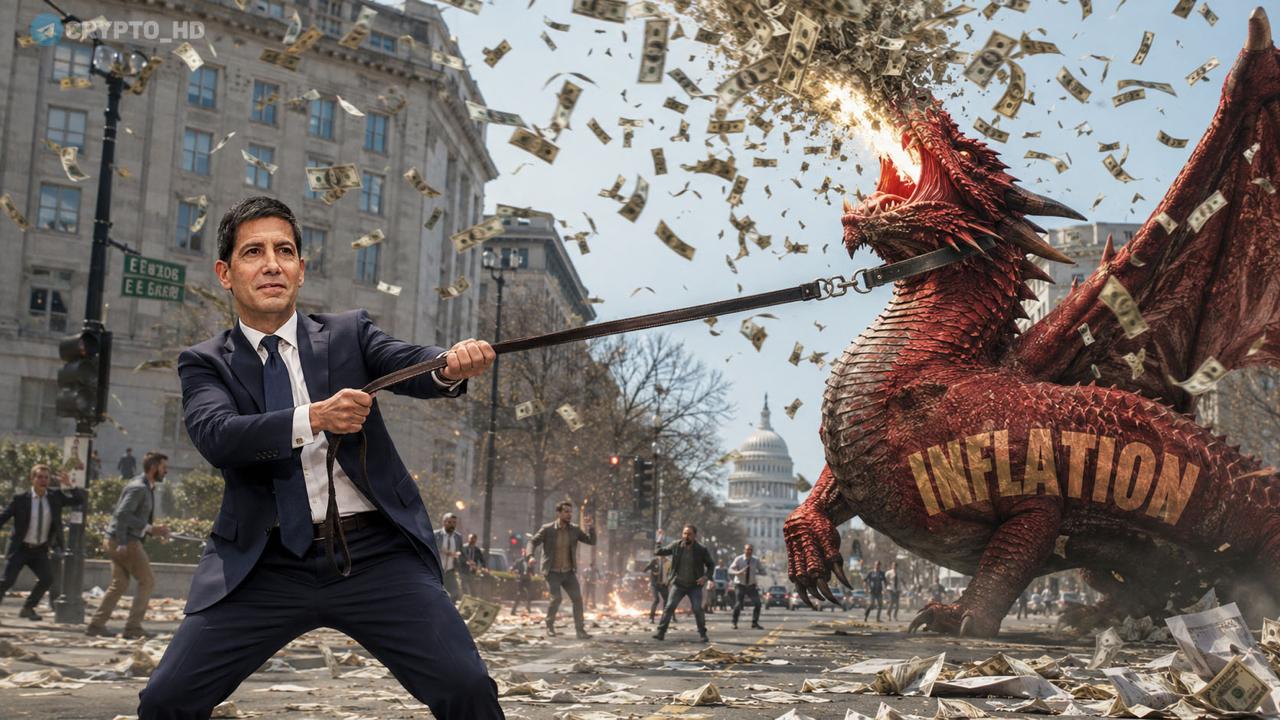
At the July 29 2026 FOMC press conference, Fed chair Kevin Warsh said the central bank remains focused on price stability, uses PCE as its core inflation gauge, and would lean toward tightening if core inflation accelerates while employment stays stable. He warned that approaches could change significantly in coming months. For crypto card users, tighter policy usually means a firmer US dollar, which raises the local-currency cost of every USD-priced card transaction and stablecoin balance abroad.
TL;DR
- Warsh confirmed PCE stays the Fed's primary inflation gauge and reaffirmed the 2% target at the July 29 2026 FOMC.
- He said if core inflation accelerates while jobs hold steady, any central banker leans toward tightening.
- A hawkish Fed typically strengthens the dollar, raising the local-currency cost of USD-priced card spend abroad.
- Warsh said the July decision broke from inertia and that Fed approaches may change significantly in coming months.
- He plans to hold press conferences after every FOMC meeting through year-end 2026.
What Warsh actually said
Speaking after the July 29 2026 FOMC meeting, Kevin Warsh stressed that the Fed watches markets closely but does not treat them as the final word. He said the yield curve and the dollar suggest the market broadly believes the Fed controls the situation. His core message: the committee is fully focused on returning inflation to 2%.
On method, Warsh confirmed PCE remains the primary inflation index, though he reviews a wider set of indicators than PCE alone. He described a dedicated project to separate market noise from meaningful signals, and said he picked 15 experts to study five key questions while final decisions stay with the committee.
The most market-relevant line: he called the July decision the opposite of moving on inertia, and warned that approaches could change significantly in the months ahead. Households and businesses, he added, are running out of patience.
“⚡ Кевин Уорш (глава #ФРС): (часть 3) ✔ Меня обнадежило, что рынок реагировал не на заявления ФРС и не на точечный прогноз по ставке, а на события в реальном времени. ✔ Мы не поддерживаем и не осуждаем конкретные движения рынка, но внимательно за ними следим. ❗️При ускорении инфляции центробанки склонны ужесточать денежно-кредитную политику. ✔ Когда занятость остается стабильной, а базовая инфляция ускоряется, любой глава центробанка скорее склонится к ужесточению политики. ✔ Кто знает, что мы скажем о нашей стратегии в январе. Наш основной показатель инфляции – индекс PCE, и мы продолжим ориен”
Why a hawkish Fed matters for a crypto card
Most crypto cards settle in USD or convert your stablecoin to USD before charging the merchant in local currency. When the Fed tightens or signals it will, the dollar tends to strengthen against other currencies. That makes every euro, peso or baht purchase cost more of your USD-denominated balance.
Warsh's point that tightening follows when core inflation accelerates is a signal, not a rate change. But markets front-run signals. If you hold a large USDT or USDC float to spend abroad, a stronger dollar is neutral to helpful for you, since your balance is already dollar-priced. If you hold local currency and spend via a card, the math flips.
None of this is a forecast. Warsh himself said this is not an exact science. Treat the direction as a risk to plan around, not a certainty to trade on.
| Scenario | Dollar direction | Effect on USD-priced card spend abroad | Who it helps |
|---|---|---|---|
| Fed tightens / hawkish signal | Stronger USD | Local prices convert to fewer USD | Holders of USD stablecoin float |
| Fed holds / dovish signal | Weaker USD | Local prices convert to more USD | Holders of local currency |
| Core inflation accelerates | Tightening bias per Warsh | Uncertain, higher volatility | Nobody - plan for both |
Practical steps if you spend crypto abroad
Do not restructure your finances on one press conference. What you can do is reduce avoidable friction. Keep spending balances in the currency you will actually be charged in where possible, and avoid double conversions - crypto to USD to local currency stacks two spreads.
Check your card's conversion cost against our card database. The best cards in our data charge 0 to 1% conversion; weaker ones add a hidden FX markup on top of network rates, which compounds badly during dollar volatility.
If you park stablecoins between trips, a flexible earn balance keeps the money spendable while offsetting some FX drag. That does not hedge currency risk, but it lowers your net carrying cost.
What is still unknown
Warsh gave direction, not decisions. He said plainly that no one knows what the Fed will say about strategy in January, and that financial conditions have already tightened, so risks are not behind us. He committed to holding press conferences after each FOMC meeting for the rest of 2026, which means more frequent signals to read.
For card users the takeaway is modest: watch the dollar, not the soundbites. A single meeting rarely moves your grocery bill. A sustained hawkish stretch, spread across several meetings, is what would meaningfully change conversion costs on everyday spend.
We do not publish rate forecasts. Everything here traces to Warsh's July 29 remarks and the FOMC broadcast linked below.
Risk warning: derivatives and crypto-backed credit involve significant risk, including liquidation of your collateral. Never commit funds you cannot afford to lose. Nothing on this page is financial, investment or tax advice.
Who this is NOT for
- Traders wanting a rate-cut or rate-hike prediction - this is signal analysis, not a forecast.
- Anyone expecting a single FOMC meeting to change day-to-day card costs materially.
- Readers looking for specific coin price targets tied to Fed policy.
- US-only spenders whose card charges and income are both in USD, where FX drag does not apply.
Frequently asked questions
If your card balance is a USD stablecoin, a stronger dollar buys more local goods per dollar, which helps. If you hold local currency and spend through a USD-settled card, it hurts. Warsh's hawkish tone points toward a firmer dollar.
NomadCrypto Editor
Editorial Team, NomadCard
The NomadCrypto editorial team verifies every published fee across 59 crypto cards against issuer documentation, with the verification date shown on every figure.