MARA's Fred Thiel: why the biggest Bitcoin miner is pivoting to AI
Based on verified official data as of 31.07.2026; hands-on update coming.
In a Coin Stories interview, MARA CEO Fred Thiel argues Bitcoin mining is losing the economic race for power: the same electron can earn 10-15 times more serving AI compute than mining BTC. MARA, the largest public Bitcoin miner, has assembled over 4GW of capacity, owns roughly 70% of its infrastructure and sold 20,000 BTC. Thiel says the company will keep mining where power is cheap or free, but the growth story is now AI and energy ownership, not coins.
TL;DR
- MARA CEO Fred Thiel claims the same electron earns 10-15x more in AI compute than in Bitcoin mining at current BTC prices.
- MARA moved from an asset-light hosting model to owning about 70% of its infrastructure by end-2024 and now controls 4GW+ of capacity.
- The company sold 20,000 BTC, a signal that Thiel no longer sees Bitcoin's growth as the primary business driver.
- Thiel points to a Duke University study: US AI demand is ~40GW versus 72GW available if load is curtailed under 2% of the day.
- Small modular reactors (SMRs), backed by investors including Bill Gates, are floated as the long-term power answer, but permitting timelines are years.
What Thiel actually said about Bitcoin mining economics
The core claim is blunt: at current Bitcoin prices, the economics of turning power into hash no longer compete with turning that same power into AI compute. Thiel frames it as a war for electrons between Nvidia, Google, OpenAI and Anthropic, all bidding for the same scarce megawatts that miners used to buy cheaply.
His sharper line for holders: Bitcoin has a fundamental problem as an asset because it does not generate yield. He argues the era of Bitcoin as a medium of exchange has already passed. That is a strong editorial position from a mining CEO, not neutral analysis, and it should be read as one operator's incentive-shaped view rather than settled fact.
MARA is not abandoning mining. Thiel says Bitcoin remains a good way to monetise electrons where energy is free or very cheap, and that many such pockets still exist. The pivot is about where new growth capital goes, not shutting down existing rigs.

“#майнинг 🫡 Майнинг Биткоина больше не выгоден – уходим в AI. За один и тот же электрон в AI-индустрии можно зарабатывать в 10-15 раз больше, чем на майнинге BTC. «У Биткоина фундаментальная проблема как у актива: он не генерирует доходность» Это и многое другое говорит человек, который построил крупнейшую майнинговую компанию в мире (MARA). Мы перевели интервью с Фредом на русский язык. Рекомендуем ознакомиться! Читать: Стенограмма Сryptо Headlines”
How MARA grew and why it started buying power
MARA began as Marathon Patent Group, a patent-holding shell that once sued Apple and Amazon over a voice-command patent. The same group that took Riot public reverse-engineered the same playbook with Marathon. Thiel joined the board in late 2017 and became CEO as employee number five in April 2021.
From 2021 to late 2023 the strategy was capital raising plus an asset-light hosting model: MARA supplied capital and machines, partners supplied power. Skipping site ownership, which normally eats 20-30% of capital and 12-18 months to build, let MARA scale faster than the market and become one of the largest miners globally.
The reversal came in 2023-2024. MARA started buying the hosting sites it already occupied, below replacement cost, and owned about 70% of its infrastructure by end-2024. The next frontier is owning the energy itself, because Thiel expects power, not machines, to be the binding constraint by the 2028-2032 halving cycles.
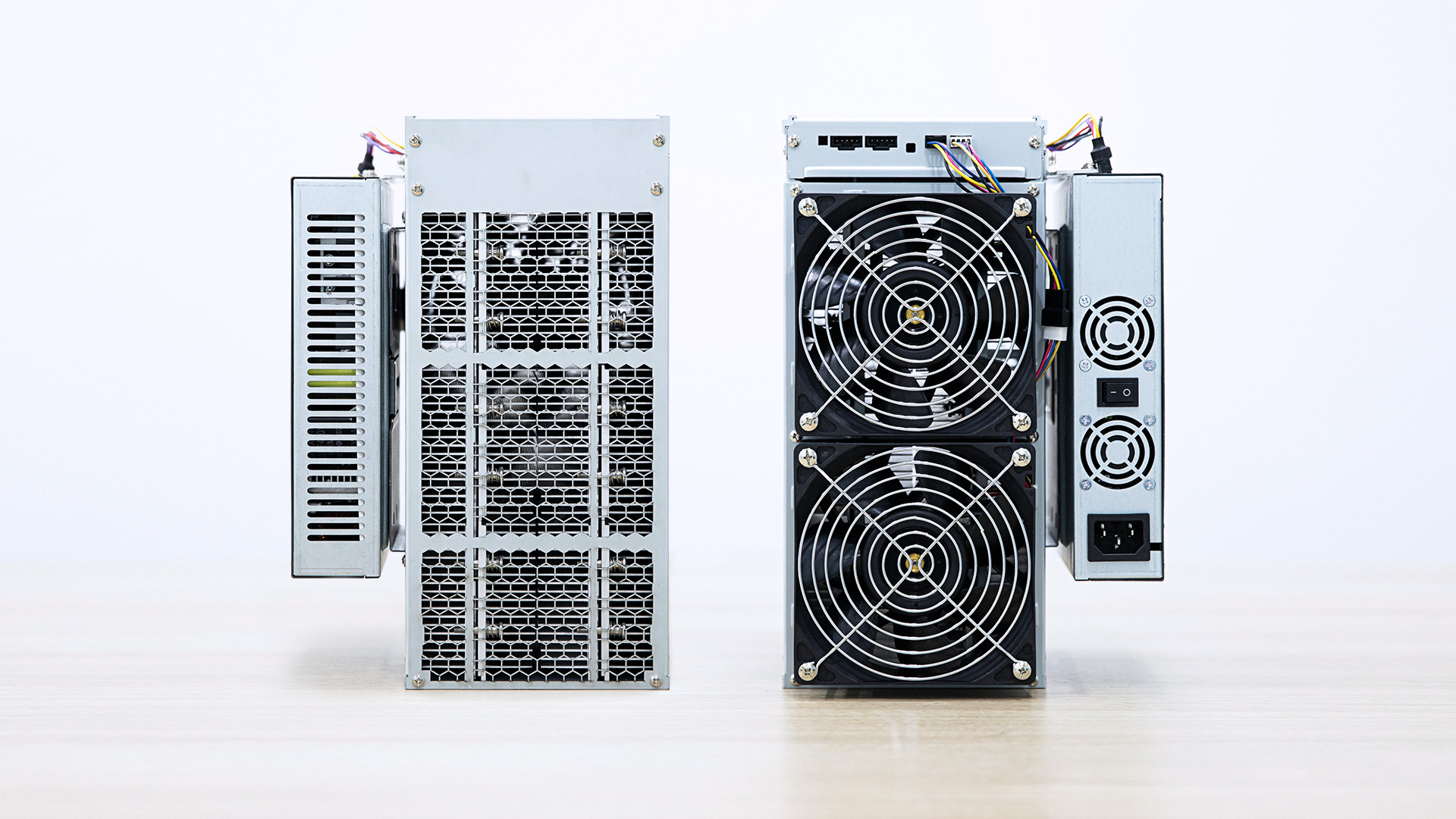
The electron war: who is bidding for power
Thiel cites a Duke University study putting total US AI demand around 40GW against 72GW of headroom, if operators accept curtailment for under 2% of the day. That is a short window that backup generators can cover, but legacy data centre operators historically demanded five-nines uptime within 100 miles of a major city, which limits where they can build.
The scarcity cascades. If only 10GW of data centre power exists, only 10GW of compute demand can be served, which caps Nvidia's addressable sales and pushes chipmakers to contract energy directly. Meanwhile OpenAI and Anthropic compete on token cost: whoever runs short on compute raises token prices, making open-weight models suddenly attractive.
New gas plants take 6-7 years. Traditional nuclear runs 20-30 years, and SMRs might reach five. Whoever already sits on land and power holds leverage over all of them, which is exactly the position MARA is trying to occupy.
| Power source | Typical build time | Thiel's note |
|---|---|---|
| New gas turbine plant | 6-7 years | Turbines and permitting still required even behind the meter |
| Traditional nuclear | 20-30 years | Effectively off the table for AI timelines |
| Small modular reactor (SMR) | ~5 years (targeted) | Standardised, water-free designs; likely on federal or First Nations land |
| Existing grid headroom | Immediate | ~72GW US if load curtailed under 2% of the day (Duke study) |
What it means if you hold BTC or a miner's stock
A mining CEO saying Bitcoin does not generate yield is not new information about Bitcoin; it is information about MARA's business model shifting toward AI hosting and energy. The 20,000 BTC sale and the infrastructure buyouts are the concrete moves. The commentary about Bitcoin's future is opinion attached to those moves.
For miner equity holders, the practical read is that MARA and peers are repositioning as power and compute companies. Revenue that once depended on Bitcoin price and hash difficulty will increasingly depend on AI compute contracts and energy margins. That changes the risk profile you are buying.
None of this is spending advice. If you earn or hold BTC, this interview does not change how a coin works on-chain. It changes who the large industrial buyers of power are, which over years can influence energy costs everywhere, including the electricity behind any card top-up or ATM run.
Risk warning: derivatives and crypto-backed credit involve significant risk, including liquidation of your collateral. Never commit funds you cannot afford to lose. Nothing on this page is financial, investment or tax advice.
Who this is NOT for
- Anyone wanting a neutral verdict on Bitcoin's long-term value: this is one mining CEO's incentive-shaped take.
- Readers looking for financial advice on MARA stock or BTC; this is a summary of claims, not a recommendation.
- People seeking verified power-cost figures per region: Thiel gives ranges and a single Duke study, not audited numbers.
- Anyone expecting card, KYC or custody guidance; this piece is industry context, not a product comparison.
Frequently asked questions
No. Thiel says MARA remains one of the largest Bitcoin miners in the world and will keep mining, especially where energy is cheap or free. The shift is where new growth capital goes, toward AI compute and energy ownership.
NomadCrypto Editor
Editorial Team, NomadCard
The NomadCrypto editorial team verifies every published fee across 59 crypto cards against issuer documentation, with the verification date shown on every figure.