The most popular advice about the best crypto cards is to chase the highest cashback rate. That's often the wrong starting point. A reward isn't valuable if conversion costs absorb it, eligibility rules exclude your purchases, or you have to lock up a token you wouldn't otherwise hold.
There's no perfect card, only the right trade-off. Visa or Mastercard acceptance is useful, but it doesn't settle questions about KYC, custody, regional availability, or the cost of turning Bitcoin or USDC into spendable currency.
The order below is a practical shortlist, not a fabricated numerical leaderboard. Fees carry the greatest weight, followed by custody and regional eligibility, then privacy, network usability, and achievable rewards. Missing terms count against confidence rather than receiving an invented score. NomadCards' published composite methodology is separate from this editorial assessment.
One distinction matters immediately: the first entry is a comparison profile for Crypto.com Visa, while the later Crypto.com entry assesses the issuer's offering. They aren't separate card programs.
Table of Contents
- 1. Card - Crypto Com Visa
- 2. Coinbase Card
- 3. Crypto.com Visa Card
- 4. Bitpanda Card
- 5. Bybit Card
- 6. Nexo Card
- 7. Wirex Card
- Best Crypto Cards: 7-Card Comparison
- Pick Your Card and Spend Smarter
1. Card - Crypto Com Visa
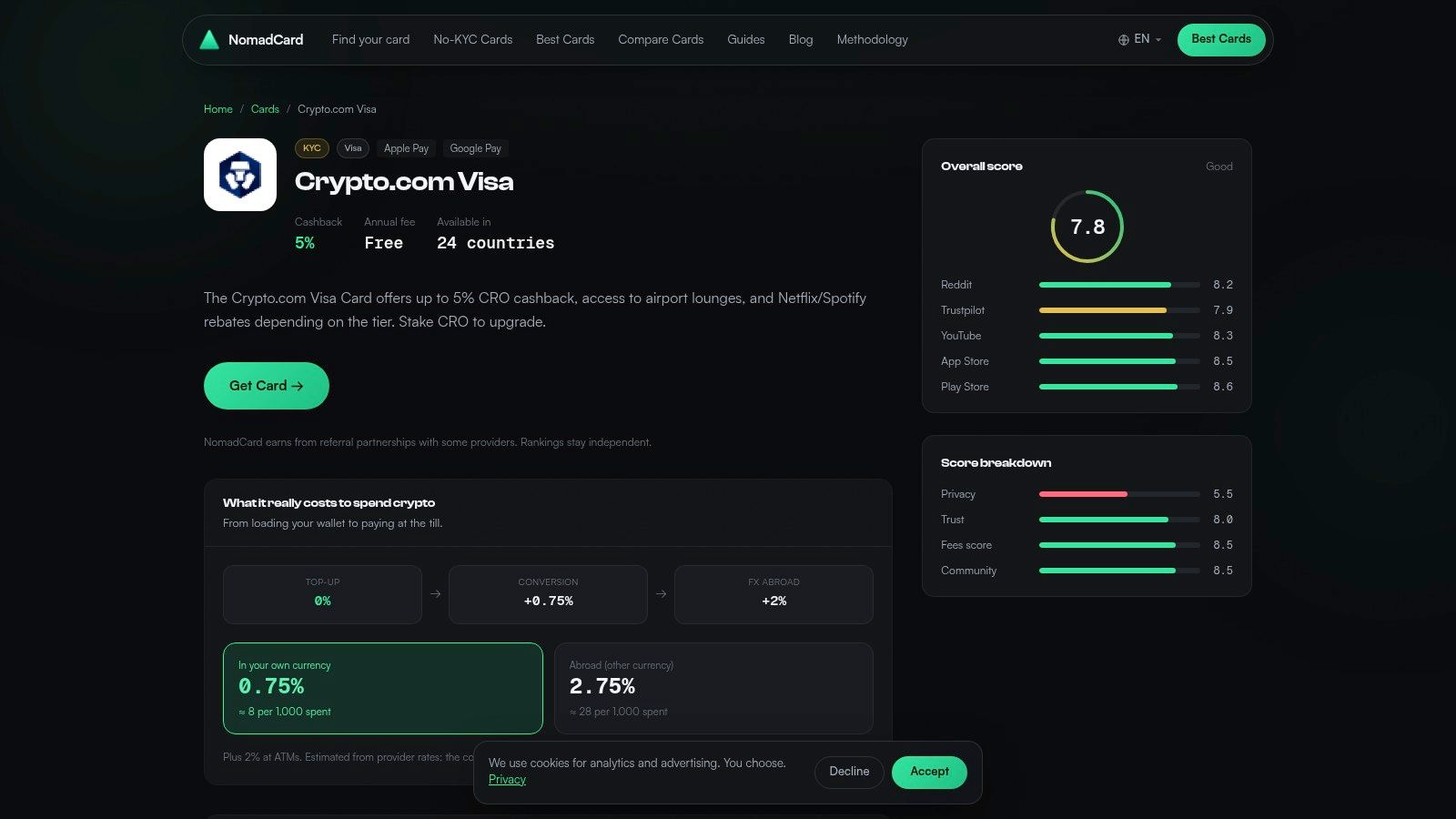
Start with the terms, not the headline reward. The NomadCards Crypto.com Visa profile brings key details into one comparison: fees, rewards, supported assets, verification, payment network, and regional availability. Use it to identify what applies to your card and country, then confirm those details against Crypto.com's current terms before applying.
The profile is useful for spotting gaps between an advertised offer and the terms that matter to you. Check the funding asset and eligible card tier, since fees and benefits may differ by market. It is a comparison profile, not a separate card program, and its listing alone does not establish current charges, rewards, or eligibility.
Before deciding, verify a few specifics in the issuer's terms:
- Total purchase cost: Check funding and conversion charges, foreign-exchange costs, withdrawal fees, and any membership conditions.
- Balance control: Confirm where the spending balance is held and what restrictions apply if your account is limited.
- Country and application rules: Check residence requirements, identity verification, and the legal entity that serves your region.
- Reward conditions: Review eligible purchases, exclusions, payout asset, and any requirements attached to the advertised tier.
The practical advantage is a consistent checklist; the trade-off is that the issuer's terms govern the account. Use the profile to focus your review, then confirm the current fee schedule and card conditions directly with Crypto.com. If a charge or requirement is not specified, get clarity before funding the card or relying on its rewards.
2. Coinbase Card
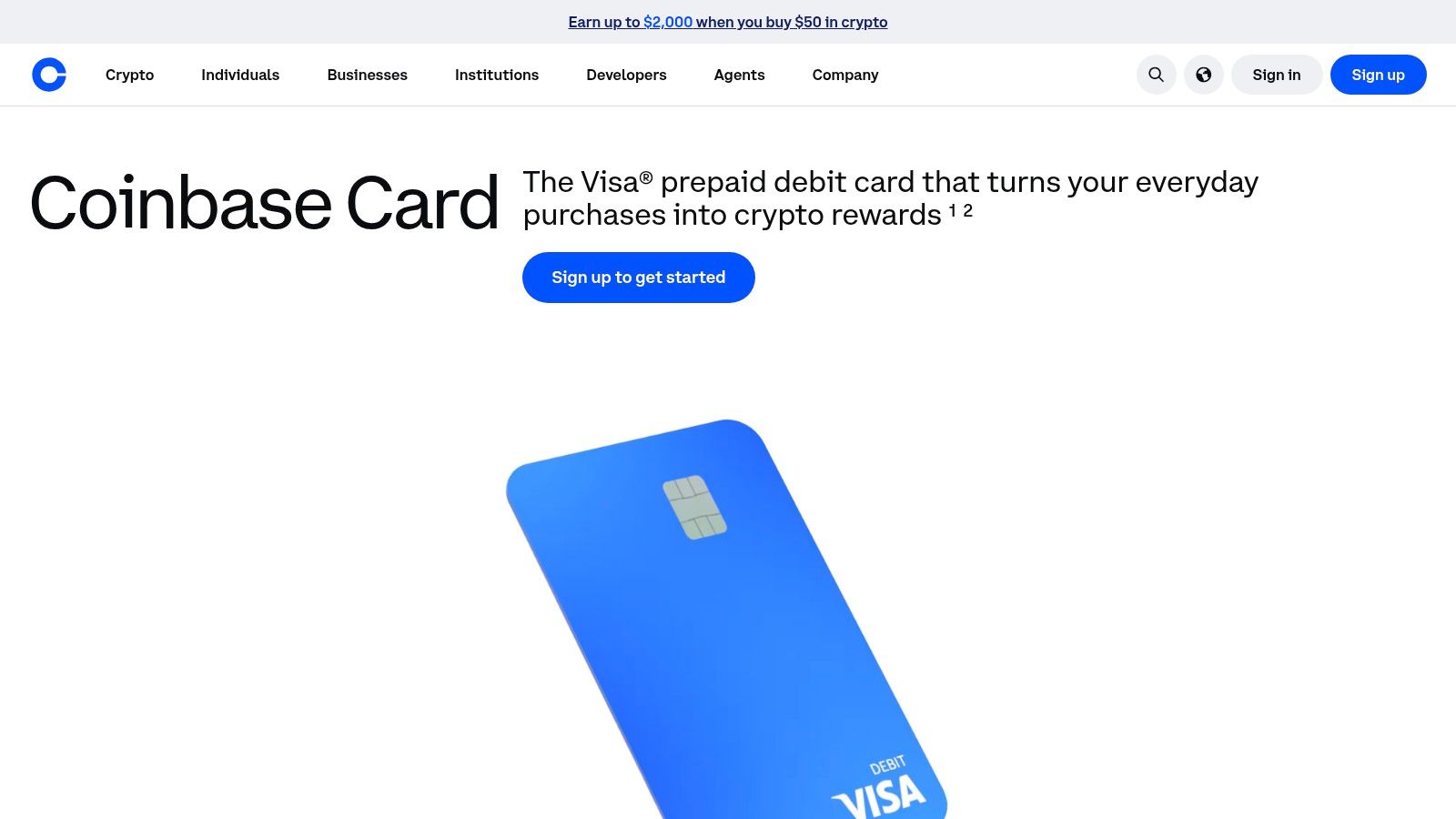
Coinbase Card is a straightforward candidate for eligible US customers who already use Coinbase. The Coinbase Card offering connects a Visa prepaid debit card to USD or supported crypto balances, with crypto converted into USD for purchases.
Coinbase advertises no annual fee or spending fee, alongside no credit check or staking requirement. Those terms make it worth evaluating before accepting a more complicated reward tier, but they don't establish that every funding or conversion route is costless.
The practical trade-off is convenience versus custody. Spending stays connected to your Coinbase account, so this isn't a substitute for keeping long-term holdings under your own control.
Where It Fits
- Existing customers: Familiar account access can reduce the work involved in setting up another spending service.
- Card controls: Virtual and physical options, card freezing, and PIN management support ordinary payment use.
- Regional limits: Eligibility is restricted to US residents and excludes Hawaii.
- Crypto spending: Conversion may have tax implications, depending on your circumstances.
Optional crypto rewards are a secondary consideration. Before funding the card, check which purchases qualify, what reward asset you'll receive, and whether selling that asset introduces another cost.
The Coinbase Card versus Crypto.com Visa comparison is useful if you're choosing between familiar account-linked spending and a tiered benefits program. Coinbase's strongest fit is simplicity, not a demonstrated privacy advantage or a universally superior return.
3. Crypto.com Visa Card
Crypto.com Visa makes more sense when you already want its ecosystem and benefits. It's less compelling when you're considering a membership or CRO commitment solely to access a more impressive cashback headline.
The Crypto.com Visa Card range uses tiers with different rewards and benefits. Depending on the card, country, and tier, qualification can involve a paid membership or CRO staking or lockup, while some tiers offer subscription rebates, lounge access, or priority support.
The catch is the cost of qualifying. A benefit you wouldn't otherwise buy shouldn't receive full value in your calculation, and locking up CRO creates a separate exposure from the money you spend.
A higher reward tier is only better if its usable benefits exceed its fees and the risks you take to qualify.
Evaluate the Tier, Not the Brand
Start with the benefits you'll really use. Compare those against the recurring payment or asset commitment, then examine the local fee schedule and reward exclusions.
This is a prepaid card, so you need to load funds rather than assume it operates like conventional unsecured credit. Keep that operational difference in mind if you need spending flexibility rather than a route for converting existing assets.
Privacy-focused users should also verify the exact onboarding requirements instead of assuming that crypto funding means limited identity checks. For this shortlist's fee-first approach, Crypto.com is a conditional fit: potentially useful for existing customers, but not automatically attractive because a premium tier advertises more benefits.
4. Bitpanda Card
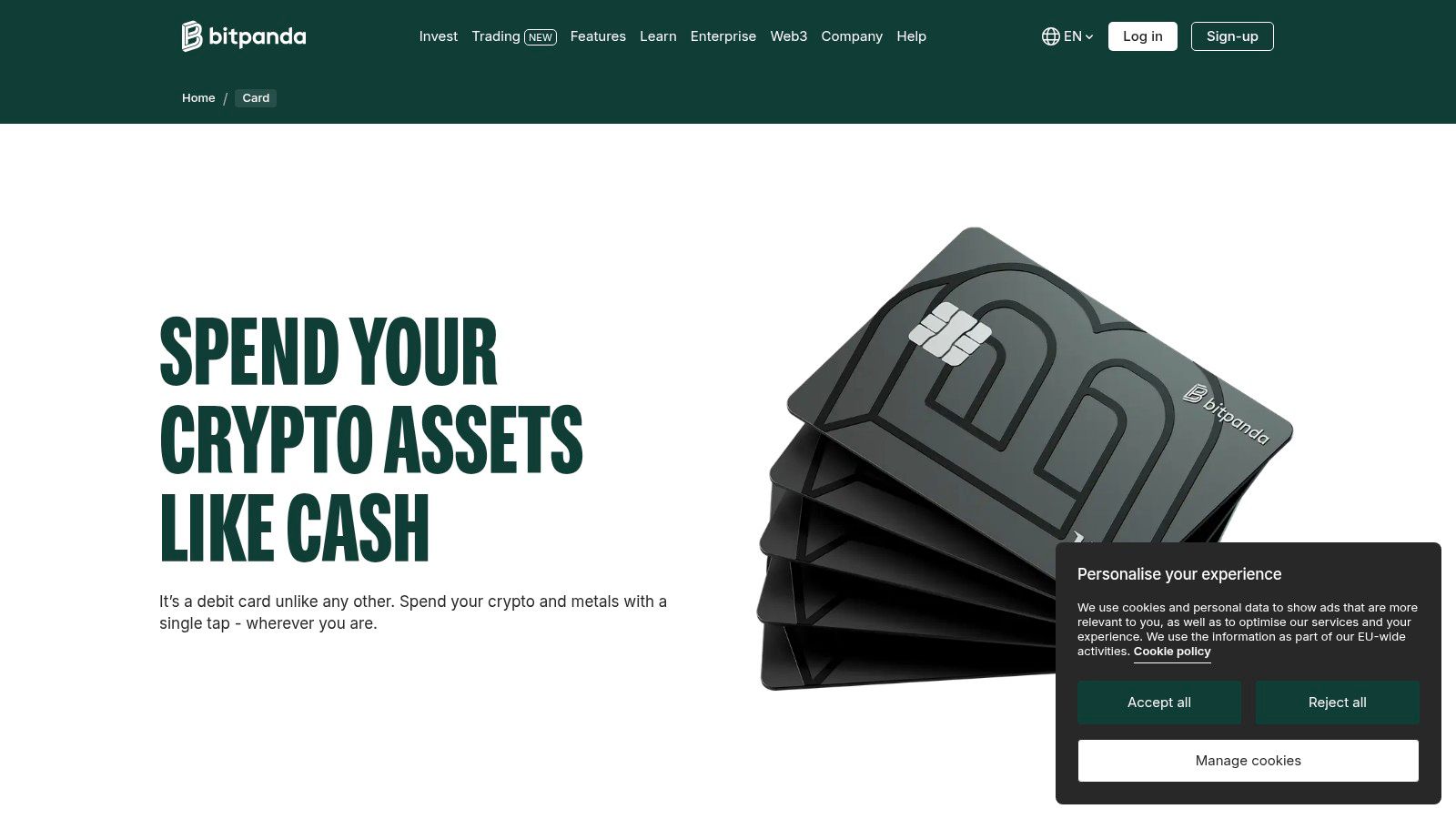
Bitpanda's important distinction is what happens underneath the card payment. Spending an eligible asset triggers an asset-to-fiat trade, so the trading charge belongs in your card-cost calculation.
The Bitpanda Card page advertises 1% cashback on qualifying crypto-funded purchases, no monthly card fee, and 0% foreign-exchange fees, subject to exclusions and possible Visa markups. Those claims describe different parts of the transaction, not an all-inclusive promise of free spending.
For an existing Bitpanda customer, main and fallback payment-asset settings can make the card convenient. Apple Pay and Google Pay support also provide alternatives to carrying the physical card.
The Cashback Exclusion That Matters
- Stablecoin spending: Stablecoins are excluded from cashback, alongside fiat, metals, and other non-crypto assets.
- Conversion costs: The usual trading fee applies when a card payment converts an asset into fiat.
- Cash access: ATM withdrawals may involve additional charges.
- Residence: Availability depends on eligible countries and the provider's euro-area residency requirements.
Best fit: someone who already holds eligible assets on Bitpanda and understands the cost of selling them to fund purchases. It's a less obvious choice for a USDC-focused spender whose main goal is earning cashback without touching volatile holdings.
Use the Bitpanda Card versus Bybit Card comparison to examine funding paths and regional costs together. Don't compare their reward headlines without first confirming that your intended payment asset qualifies.
5. Bybit Card
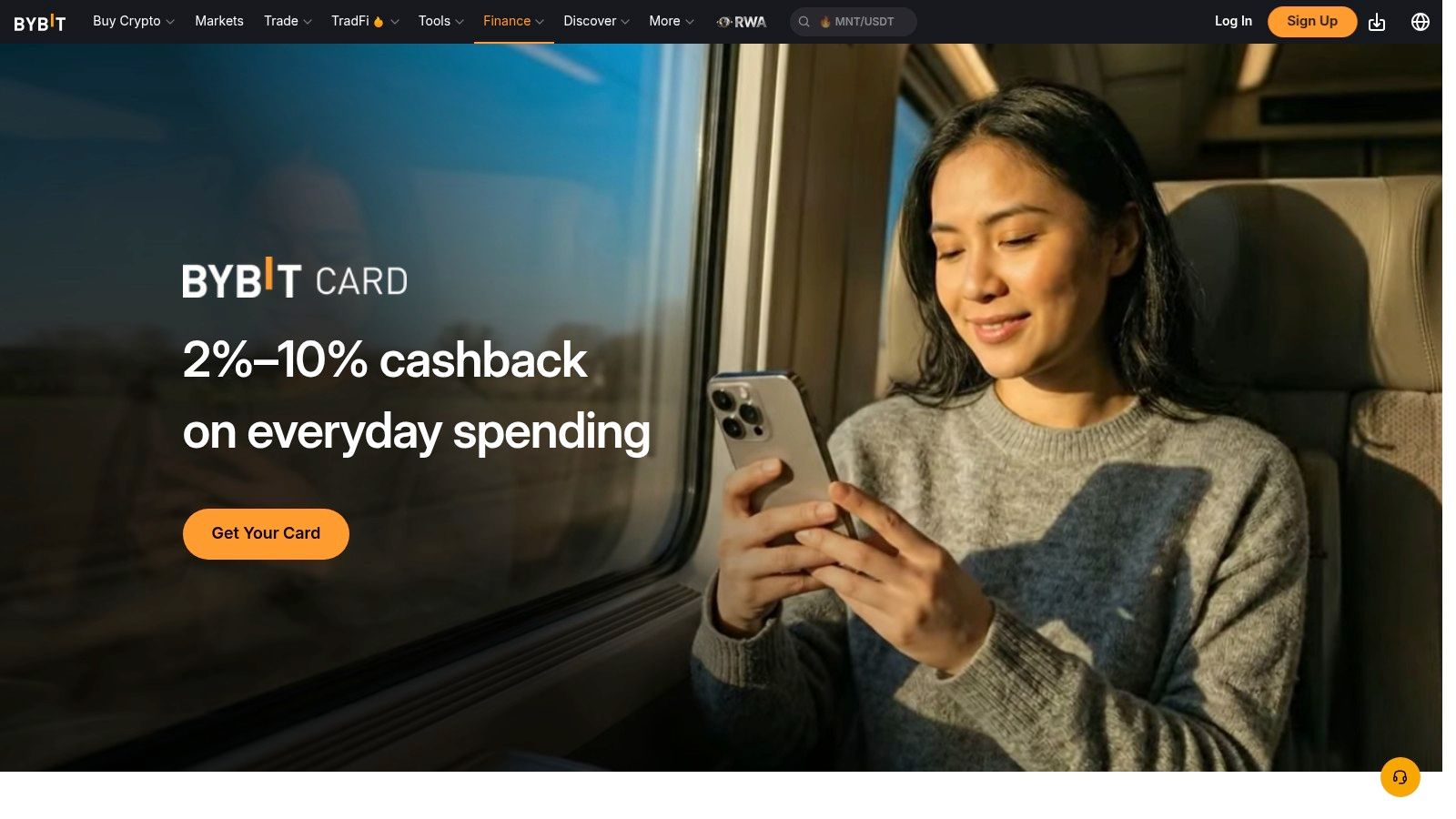
Check local fees before weighing Bybit's cashback offer. The Bybit Card offering describes virtual and physical card availability by market, with eligible assets in a Bybit account available for spending. Confirm the card network, fees, and terms on the live page for your region before applying.
The card may suit customers who already keep spending funds on Bybit. That convenience alone doesn't justify transferring new funds to qualify. Issuance, conversion, and spending charges vary by region, while cashback depends on tier and eligibility. Treat rewards as conditional and check the terms that apply to your account.
Test the Actual Funding Route
Compare the full payment path: deposit an asset, make it available for card spending, convert it if needed, then settle in the merchant's currency. A low charge at one step doesn't prove the whole transaction is cheap.
- Virtual issuance: Free issuance in some markets doesn't mean every format or region is free.
- Currency conversion: Check crypto conversion and foreign-exchange charges.
- Reward eligibility: Review funding restrictions, exclusions, redemption terms, and current account rules.
Bybit suits users who value spending from an existing account and will keep track of changing program terms. It's a weaker fit for anyone seeking predictable rewards with little ongoing monitoring.
For privacy and custody, check local onboarding requirements and account-control terms. Familiarity with an exchange doesn't give you independent control of the spending balance.
6. Nexo Card
Nexo's defining choice is whether to spend assets or borrow against them. The Nexo Card supports debit and crypto-backed credit modes, making it materially different from a straightforward prepaid spending product.
Debit mode spends eligible balances. Credit mode uses a crypto-backed credit line, potentially allowing you to avoid selling the collateral at the point of purchase.
That distinction can be useful, but avoiding an immediate sale doesn't make borrowing free or riskless. You still need to understand the borrowing terms, collateral requirements, repayment process, and what happens if the collateral falls in value.
Don't borrow against crypto merely to earn a card reward. Assess the borrowing decision separately from the cashback.
When the Added Complexity Is Justified
Nexo may fit eligible EEA residents who deliberately want both spending modes and can monitor collateral. It's a weaker fit for someone who only wants to spend a stablecoin balance without managing a credit position.
Advertised credit-mode rewards depend on eligibility and account conditions. Cashback may be available in NEXO tokens or, under stated conditions, Bitcoin, so the reward asset also deserves attention.
The Nexo Card versus Wirex Card comparison helps distinguish borrowing flexibility from multi-currency spending convenience. Compare total borrowing cost and collateral exposure against direct conversion costs, rather than treating both products as interchangeable debit cards.
Geographic access remains a gating condition. Confirm eligibility before evaluating benefits that may not be available in your jurisdiction.
7. Wirex Card
Wirex suits people who need multi-currency spending and cash access, provided the actual conversion costs fit their spending route. The Wirex Card links card payments to crypto and traditional-currency balances. Issuance and benefits depend on country and account program.
Wirex advertises crypto rewards on eligible transactions and fee-free ATM withdrawals within a monthly allowance. Before relying on either benefit, check the allowance shown for your account, which withdrawals count toward it, and what fees apply after it is used. For rewards, confirm which purchases qualify, whether account or tier conditions apply, and how rewards are paid. Terms can vary, so verify them in the current card details.
Conversions and other transactions may still involve fees or spreads, and card issuance may carry a charge. Check the live quote for your route rather than assuming multi-currency support removes conversion costs.
Check the Currency Corridor
For a personal purchase abroad, compare the currency you hold, the asset or balance being used, and the merchant's charge currency. That makes conversion costs easier to spot.
- Rewards: Check eligible purchases and account conditions before estimating their value.
- Withdrawals: Confirm the monthly allowance and charges beyond it.
- Availability: Check whether Wirex issues a card where you live.
- Operational access: Review support for payment holds, disputes, and proof-of-funds requests.
Wirex's best fit is multi-currency convenience, if the quoted costs suit your usual spending and the card's current terms meet your needs.
Best Crypto Cards: 7-Card Comparison
| Option | Setup & requirements 🔄 | Fees & rewards 📊 | Availability | Best fit 💡 | Key advantage & trade-off |
|---|---|---|---|---|---|
| Crypto.com Visa profile (NomadCards) | Comparison page; check the live profile and issuer terms | Specific fees and rewards not provided | Depends on the card's current regional terms | Comparing crypto-linked cards | ⭐ Standardized comparison fields; card-specific details are missing |
| Coinbase Card | Coinbase account; no credit check or staking requirement stated | No annual or spending fee for USD or crypto, as advertised; optional crypto rewards | Eligible US residents, excluding Hawaii | Existing Coinbase customers seeking simple exchange-linked spending | ⭐ Familiar setup; crypto spending converts to USD and may have tax implications |
| Crypto.com Visa Card | Prepaid card; tier may require membership fee or CRO lockup | Tiered rewards and benefits; costs and terms vary | Region- and tier-dependent | Crypto.com users who can weigh rewards against tier costs | ⭐ Some tiers include travel or service benefits; higher tiers may require substantial commitment |
| Bitpanda Card | Eligible Bitpanda account and supported assets | Advertised 1% cashback on qualifying crypto purchases; trading fees may apply | Eligible countries, with euro-area residency requirements | Bitpanda customers seeking asset spending and mobile-wallet support | ⭐ No monthly card fee advertised; asset conversion and exclusions affect value |
| Bybit Card | Bybit account; virtual or physical card depends on location | Tier-dependent cashback; regional conversion and FX fees may apply | Supported markets only | Bybit users who want a card linked to account assets | ⭐ Fee schedules are published; changing reward rules and fees can reduce value |
| Nexo Card | Eligible account; debit mode spends assets, credit mode borrows against crypto collateral | Cashback may depend on mode and account eligibility | Limited geographic access; terms vary | EEA residents seeking both spending and crypto-backed borrowing | ⭐ Two spending modes; credit mode carries borrowing and collateral risk |
| Wirex Card | Wirex account linked to currency and crypto balances | Rewards and fee-free ATM withdrawals may have conditions or limits | Issuance and benefits vary by country and account | Users seeking multi-currency spending, crypto rewards, and ATM access | ⭐ Combines card and multi-currency account; conversions, spreads, and issuance may cost extra |
Pick Your Card and Spend Smarter
The biggest rewards figure does not tell you what a card costs to use. For eligible US customers, Coinbase deserves consideration as a straightforward option. Existing Crypto.com customers should weigh usable tier benefits against the commitment. Bitpanda and Bybit fit users who already hold eligible spending assets on those platforms. Nexo offers borrowing flexibility, while Wirex focuses on multi-currency spending. No card is the lowest-cost choice for every country and transaction.
Make the Cost Comparison Real
Compare the same purchase, funding asset, and settlement currency across your shortlist. Add conversion spread, trading charges, FX costs, and any allocated membership cost. Then subtract rewards you can actually redeem.
For example, on a $1,000 purchase, suppose conversion and trading cost $10, FX costs $5, and the purchase earns $8 in usable rewards. The net cost is $7: $10 plus $5, minus $8. If the settlement currency differs from the funding currency, include the issuer's actual FX charge in that calculation. Replace these illustrative figures with live quotes before deciding. The stablecoin payment-cost considerations in the supplied McKinsey analysis are a reason to check transaction costs, not to assume stablecoin funding is automatically cheaper.
- Low fees: Choose a clear, inexpensive route from funding asset to payment.
- Maximum cashback: Count rewards only on purchases that qualify and that you can use.
- Privacy: Check KYC and data requirements. Crypto funding does not mean anonymous spending.
- Travel: Confirm country eligibility, destination-currency costs, cash access, and dispute support.
Check legal status as well as cost. The AMF's MiCA guidance outlines the EU authorization framework and transitional arrangements for covered crypto-asset services. Provider authorization and your jurisdiction therefore belong on the checklist.
Use NomadCards to filter by KYC, network, country, and custody, then confirm current fees with the issuer. Start with a small purchase; check the settled transaction, reward, and remaining balance before shifting more spending to the card.
NomadCards standardizes comparisons of crypto-card fees, rewards, custody, verification requirements, and regional availability. Use its finder to shortlist cards for your country and funding assets, then check each issuer's current terms before applying.