The 3% foreign transaction fee is the easiest fee in banking to avoid, because you can choose a card that doesn't charge it. The savings aren't trivial: U.S. government payment guidance describes combined international-purchase surcharges of about 2% to 3%, equivalent to $40 to $60 on $2,000 of spending abroad.
But no foreign transaction fee doesn't mean no currency-conversion cost. Issuers can add their surcharge on top of the network's conversion process, while merchants can offer their own conversion at checkout. The Consumer Financial Protection Bureau explains that networks use applicable government-mandated or wholesale rates, and processing dates can affect the rate you receive.
The best no foreign transaction fee credit cards therefore need more than a fee waiver. Acceptance, usable rewards, annual costs, and dispute support matter too. For crypto holders, crypto-linked cards belong in that comparison, but a waived FX fee doesn't prove that asset conversion is free. These U.S. card options offer different ways to balance those trade-offs.
Table of Contents
- 1. Capital One Venture X Rewards Credit Card
- 2. Capital One Venture Rewards Credit Card
- 3. Capital One VentureOne Rewards Credit Card
- 4. Chase Sapphire Preferred® Card
- 5. Bank of America® Travel Rewards Credit Card
- 6. Discover it® Miles
- 7. American Express® Gold Card
- The 7 no foreign transaction fee credit cards at a glance
- Pick Your Card, Then Verify the Fine Print Before You Fly
1. Capital One Venture X Rewards Credit Card
Venture X suits frequent travelers who'll use its benefits without changing their spending habits. The appeal isn't just avoiding an international surcharge. It's combining straightforward everyday rewards with travel benefits that would otherwise cost you money.
The Capital One Venture X product page lists a $395 annual fee, 2 miles per dollar on general purchases, a $300 annual Capital One Travel credit, and 10,000 anniversary miles, alongside no foreign transaction fees, subject to terms. Eligible portal bookings earn higher rewards, and lounge access comes with enrollment and access conditions.
The catch is the booking channel
The travel credit is useful only if booking through Capital One Travel works for you. Compare the portal's final price, cancellation terms, and available itinerary against booking directly before treating the credit as money saved.
- Best advantage: Everyday spending earns miles without requiring constant category tracking.
- Main compromise: A premium annual fee remains payable even when you don't use the travel benefits.
- Before applying: Review lounge eligibility, guest conditions, and current access rules rather than assuming every airport visit is covered.
Practical rule: Value a travel credit at what you'd willingly spend through that booking channel, not automatically at its face value.
For crypto-funded travel, apply the same discipline using an effective card-fee comparison. Separate the annual cost, foreign-purchase surcharge, asset-conversion spread, and withdrawal charges before subtracting rewards. A premium credit card can make sense, but only when its usable benefits outperform a simpler alternative.
2. Capital One Venture Rewards Credit Card
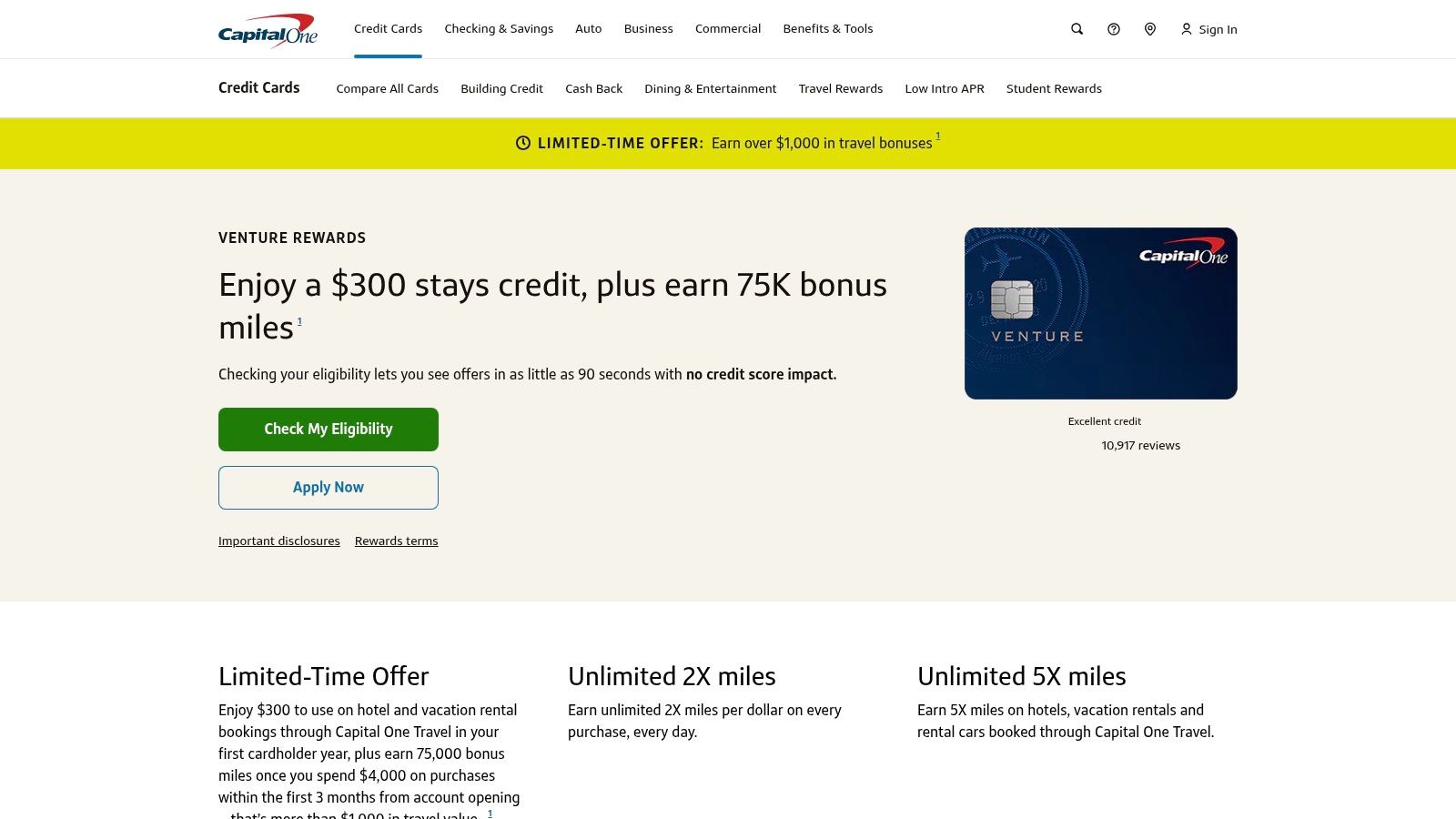
Choose Venture Rewards when you want travel miles without organizing your card choice around lounges. It's a more restrained option than Venture X, although you still need to earn enough useful rewards to justify paying an annual fee.
According to the Capital One Venture Rewards product page, the card has a $95 annual fee, earns 2 miles per dollar on general purchases, and earns 5 miles per dollar on eligible hotels, vacation rentals, and rental cars booked through Capital One Travel, with no foreign transaction fees. Miles can cover eligible travel purchases or transfer to participating travel programs.
Straightforward earning, less straightforward value
Earning miles is simple. Deciding what those miles are worth requires more care, because a travel redemption and a cash redemption aren't interchangeable.
Say you're choosing between covering an eligible travel purchase and transferring miles for a flight. Check the actual booking you can secure, including availability and additional charges, rather than assigning every mile an optimistic theoretical value.
- Choose it for: Consistent rewards on ordinary purchases abroad and flexible travel redemption routes.
- Watch the restriction: Higher booking rewards require the specified portal and eligible purchase types.
- Skip it when: You travel infrequently and would prefer avoiding an ongoing card fee.
I'd favor Venture over Venture X when premium benefits would mostly go unused. However, avoiding a foreign transaction fee alone isn't a reason to pay for Venture, because the next option removes that surcharge without an annual fee.
3. Capital One VentureOne Rewards Credit Card
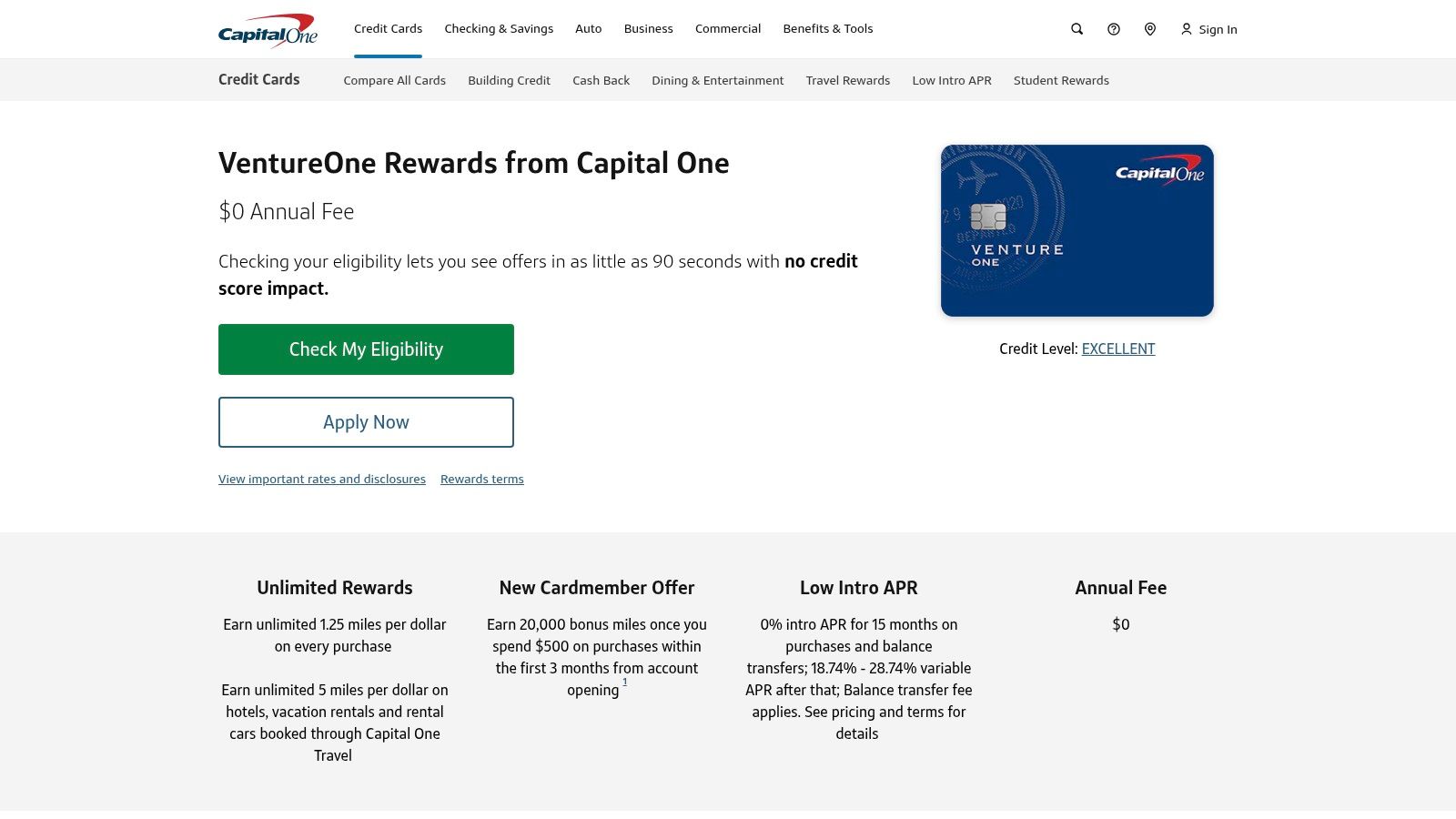
An occasional overseas trip doesn't automatically justify a paid travel card. VentureOne is the more practical starting point when your priority is keeping ongoing costs down rather than maximizing rewards on every purchase.
The Capital One VentureOne product page lists no annual fee, no foreign transaction fees, 1.25 miles per dollar on general purchases, and 5 miles per dollar on eligible hotels, vacation rentals, and rental cars booked through Capital One Travel. Travel-oriented redemption options include covering eligible travel purchases.
The trade-off is clear: you accept a lower general earning rate than Venture in exchange for avoiding its annual charge. That can be sensible for a card that spends much of the year waiting for your next trip.
Don't pay for rewards you won't earn
Compare your likely spending, not your ideal travel calendar. A paid card needs to deliver enough additional usable rewards or benefits to justify its cost against a no-annual-fee alternative.
- Good fit: Occasional travelers who want miles without a recurring ownership charge.
- Weak fit: Heavy spenders who could make meaningful use of a stronger earning structure.
- Important limitation: Portal bonuses don't apply indiscriminately to every travel purchase.
VentureOne also works as a candidate for a travel backup, provided its actual network suits your destination. Confirm the network on the card you're issued and test account access before departure. A spare card is useful only if you can activate it, authenticate purchases, and reach support when your main payment method fails.
4. Chase Sapphire Preferred® Card
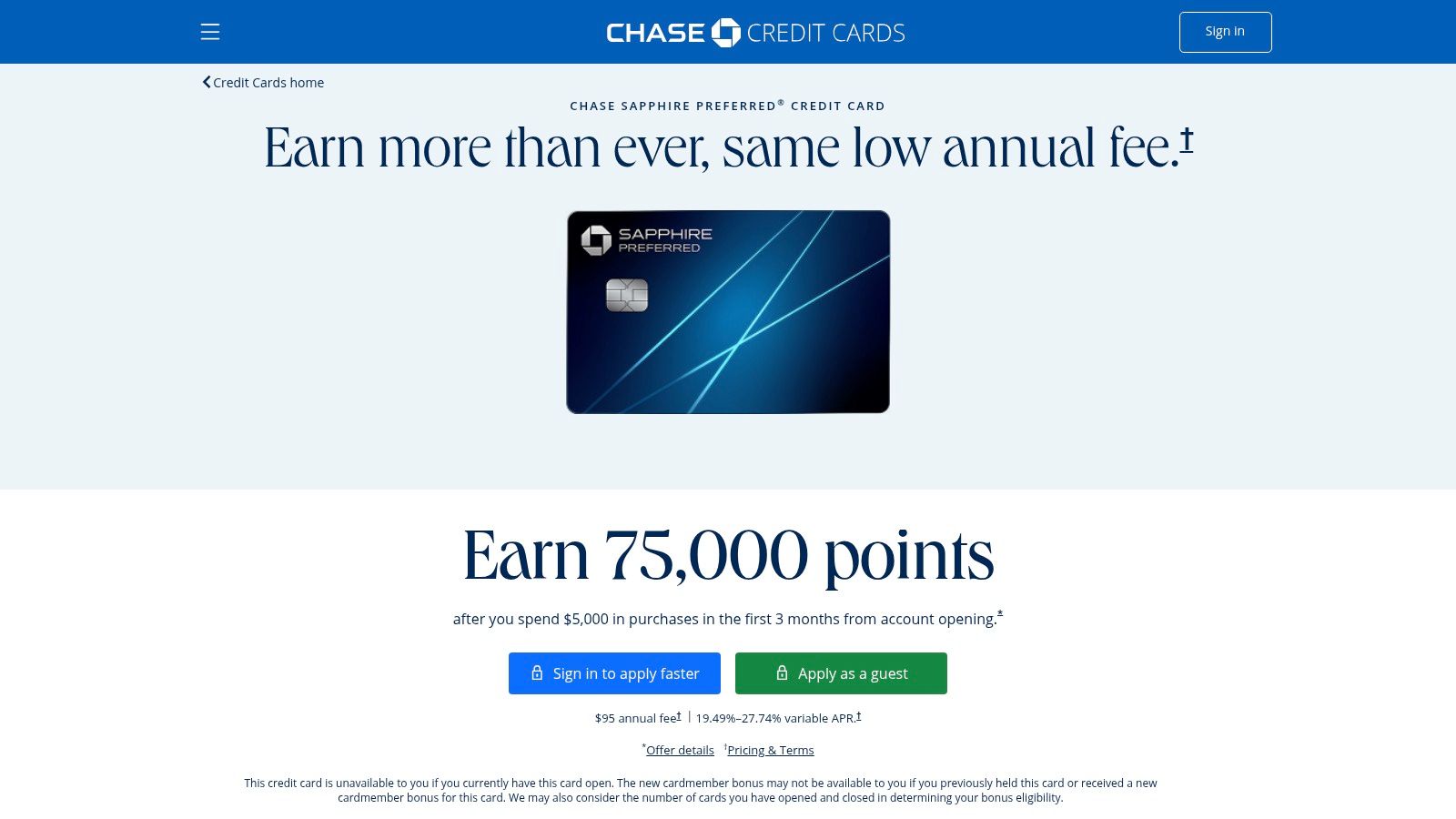
Sapphire Preferred is the points optimizer's choice, rather than the simplest card in this selection. It makes more sense when you're willing to compare redemption routes and read travel-protection conditions before relying on them.
The Chase Sapphire Preferred product page lists a $95 annual fee, no foreign transaction fees, bonus earning in eligible travel and dining categories, and access to participating transfer partners. It also describes baggage and trip-related protections, subject to eligibility requirements and exclusions.
Protection deserves its own comparison
Don't treat a card's travel coverage as blanket insurance. Read the benefits guide for qualifying payment requirements, covered events, excluded situations, and the documents needed for a claim.
Cross-border dispute support matters independently of travel insurance. The Central Bank of Ireland's payment-fraud statistics report that cross-border transactions represented 69.8% of fraudulent payment value in 2025. That finding supports checking foreign-use alerts and accessible dispute procedures, not assuming every overseas purchase is unusually dangerous.
A fee waiver saves money on a successful purchase. Dependable support matters when the purchase goes wrong.
Visa acceptance makes Sapphire Preferred a practical international option, but no network guarantees acceptance at every merchant. Keep a separately stored backup and enable purchase notifications.
Crypto holders should also distinguish spending with a card from buying cryptocurrency with a card. Cash-like transactions may receive different treatment under card terms and may not earn rewards. Don't assume the foreign-purchase fee waiver makes cryptocurrency purchases an inexpensive funding route.
5. Bank of America® Travel Rewards Credit Card
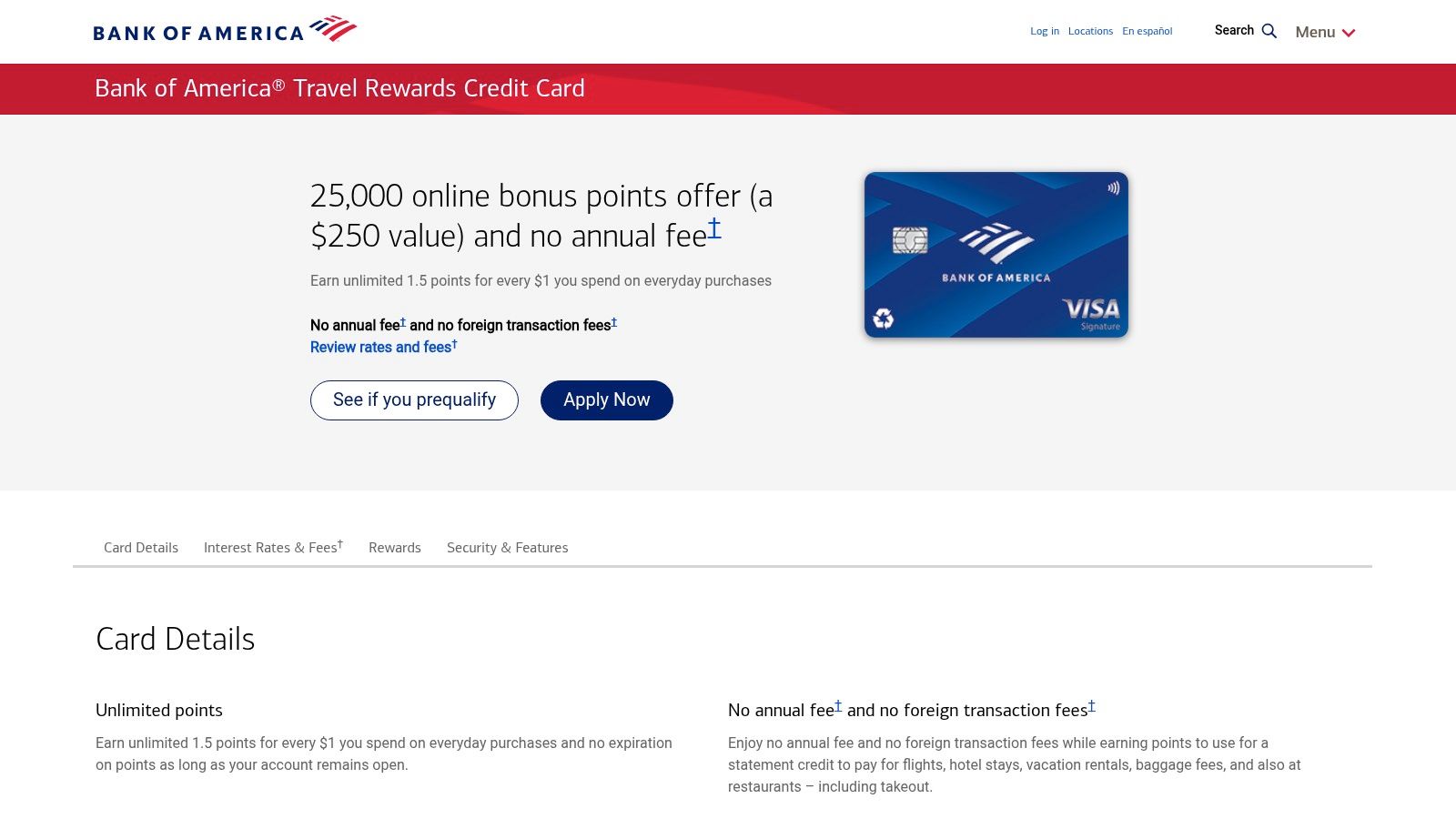
Bank of America Travel Rewards favors low maintenance over premium perks. It's a sensible candidate if you want to earn on everyday purchases and redeem against eligible expenses without learning airline transfer programs.
The Bank of America Travel Rewards product page lists no annual fee, no foreign transaction fees, and 1.5 points per dollar on everyday purchases. Points can become statement credits toward eligible travel and dining purchases, and eligible banking customers may qualify for rewards boosts.
The main attraction is predictable ownership cost. The limitation is that straightforward statement-credit redemptions don't provide the same transfer-partner opportunities that some travelers value.
Keep the payment route simple
For ordinary travel spending, focus on the amount charged, the merchant's currency, and the redemption you'll use. Don't assume the absence of a foreign transaction fee removes ATM charges or merchant currency-conversion costs.
- Best use: Everyday purchases and trips where low ongoing cost matters more than lounge benefits.
- Banking consideration: Evaluate any relationship-based rewards benefit against your existing banking needs.
- Benefit gap: Don't assume premium travel protections or lounge access are included just because the card carries a travel label.
For digital-asset spending, the crypto-card travel and FX guide addresses a different payment route. Compare the asset-to-spending-currency conversion separately from the spending-currency-to-merchant-currency conversion.
A crypto-linked card may waive an explicit FX charge while still applying an asset-conversion spread. This conventional credit card avoids that particular funding mechanism, but it doesn't directly spend your digital assets.
6. Discover it® Miles
Acceptance is the deciding issue with Discover it Miles. A simple rewards structure is useful, but it can't compensate for a declined payment when you're checking into a hotel or buying a train ticket.
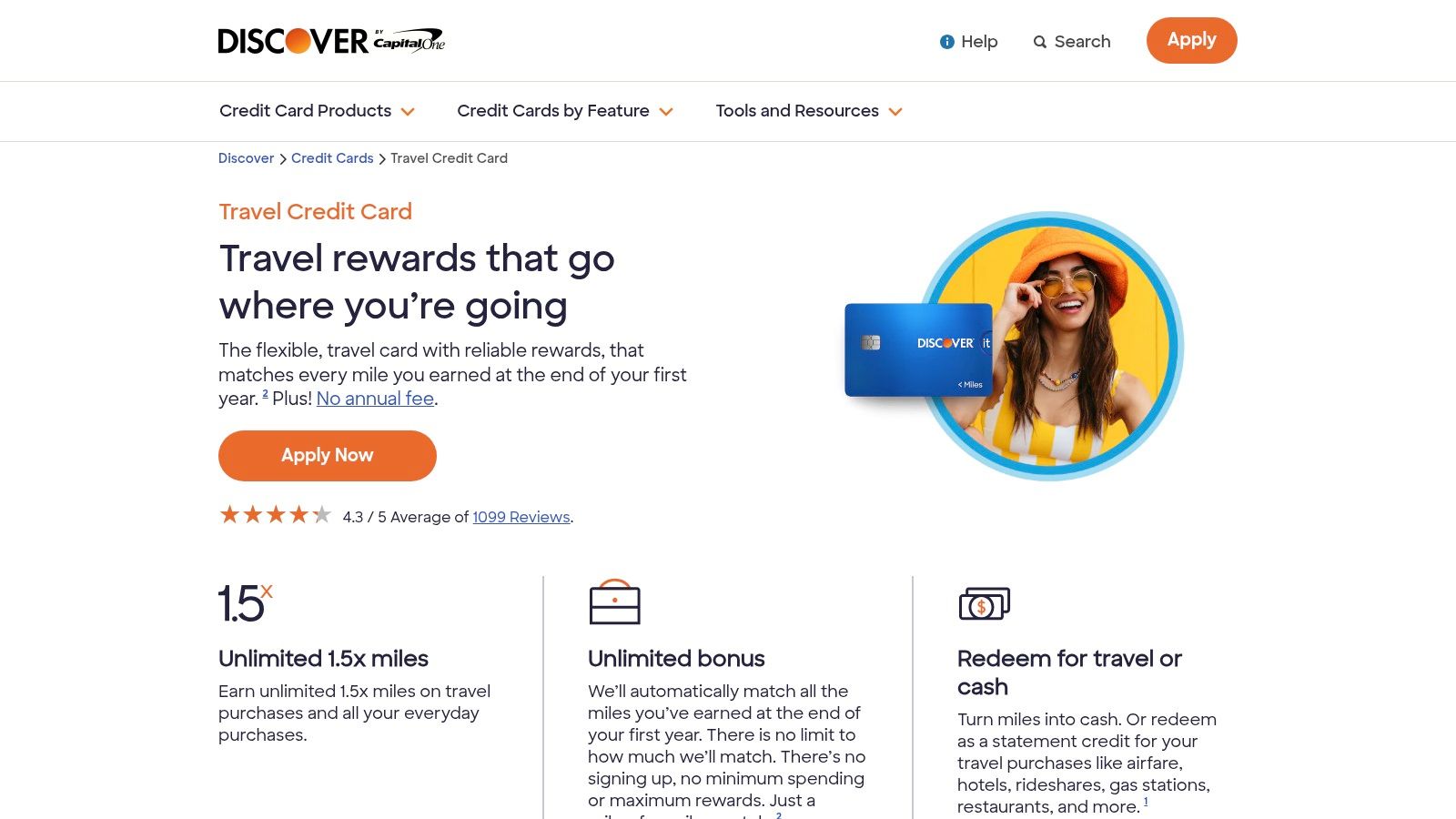
The Discover it Miles product page lists no annual fee, no foreign transaction fee, and 1.5 miles per dollar on purchases, plus a match of miles earned during the first 365 days for eligible new cardmembers. Redemption options include cash and statement credits toward eligible travel purchases.
That introductory match can improve the initial rewards proposition. It isn't a continuing annual benefit, so evaluate the card's ongoing value separately.
Carry another network
Discover's domestic acceptance messaging doesn't establish whether a particular overseas restaurant, transport operator, or hotel will take your card. Check destination-specific acceptance and carry a Visa or Mastercard backup rather than treating Discover as your only payment method.
- Strength: Straightforward earning and flexible redemption without an annual ownership charge.
- Constraint: Overseas acceptance may be less consistent than your itinerary requires.
- Preparation: Keep the backup accessible, funded or within its credit limit, and stored separately.
Travel safeguard: A backup on a different network is more useful than another card exposed to the same acceptance gap.
The same principle applies to crypto-linked cards. Before comparing cashback, identify the underlying network and available physical-card format, then review the guide to hidden crypto-card fees. Funding, conversion, and withdrawal costs can matter even when purchases carry no headline foreign transaction fee.
7. American Express® Gold Card
Restaurant-heavy travel makes American Express Gold worth considering. It's less convincing as a universal travel card if you won't use its credits or frequently visit merchants that don't accept Amex.
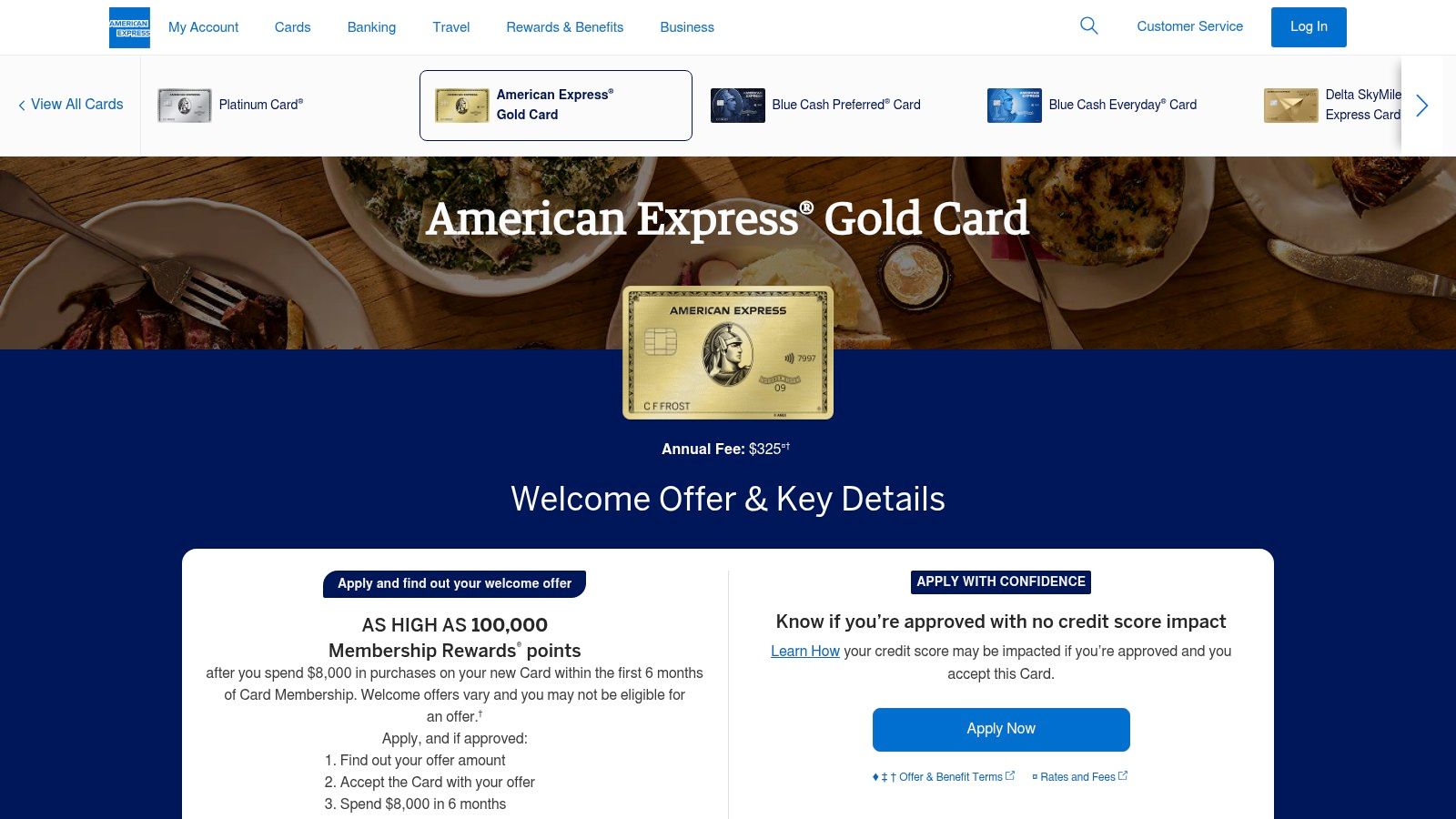
The American Express Gold product page lists a $325 annual fee and 4X points at restaurants worldwide, subject to annual limits and terms, with no foreign transaction fees. Other bonus opportunities include eligible U.S. supermarket purchases and eligible flights.
The geographical wording matters. Worldwide restaurant rewards don't mean every bonus category applies worldwide, and a purchase must meet the relevant category and eligibility conditions.
Credits aren't automatic savings
Treat statement credits as valuable only when they cover purchases you'd otherwise make. Enrollment rules, eligible merchants, and booking restrictions can make a benefit less useful than its headline description suggests.
- Choose it for: Substantial eligible restaurant spending and an existing use for Membership Rewards.
- Question the cost: If credits encourage extra purchases, they aren't fully offsetting the annual fee.
- Bring backup: Carry a Visa or Mastercard for merchants that won't accept American Express.
Membership Rewards also requires a redemption decision. Compare the travel you can book with simpler redemption routes rather than assuming a high points balance guarantees high value.
I'd choose Gold for a dining-focused traveler who can justify the ongoing cost independently of the foreign-fee waiver. I wouldn't choose it merely to avoid international surcharges, and I wouldn't rely on it as the only card abroad. Acceptance and usable benefits must support the recommendation.
The 7 no foreign transaction fee credit cards at a glance
| Card | Annual fee | Rewards rate | Best for | Acceptance caveat |
|---|---|---|---|---|
| Capital One Venture X Rewards Credit Card | $395 | 2 miles per dollar on general purchases; higher rates on eligible Capital One Travel bookings | Frequent travelers who can use the travel credit and lounge access | Lounge access is subject to terms and availability |
| Capital One Venture Rewards Credit Card | $95 | 2 miles per dollar on general purchases; 5 miles per dollar on eligible Capital One Travel bookings | Flexible travel rewards with a lower fee than Venture X | Higher travel rate requires eligible Capital One Travel bookings |
| Capital One VentureOne Rewards Credit Card | No annual fee | 1.25 miles per dollar on general purchases; 5 miles per dollar on eligible Capital One Travel bookings | Occasional travelers seeking no-fee travel rewards | Higher travel rate requires eligible Capital One Travel bookings |
| Chase Sapphire Preferred® Card | $95 | Bonus points in select travel and dining categories; points on other eligible purchases | Travelers seeking flexible points and travel protections | Cash-like transactions, including cryptocurrency purchases, may not earn rewards |
| Bank of America® Travel Rewards Credit Card | No annual fee | 1.5 points per dollar on everyday purchases | Travelers seeking simple rewards with low ongoing costs | Rewards depend on eligible purchase and redemption terms |
| Discover it® Miles | No annual fee | 1.5 miles per dollar; first-year match for eligible new cardmembers | No-fee rewards with flexible redemptions | Discover acceptance may be less consistent outside the U.S.; consider a backup card |
| American Express® Gold Card | $325 | 4X points at restaurants worldwide; bonus points at U.S. supermarkets and on eligible flights | Travelers with high dining spend who can use card credits | American Express is not accepted everywhere; consider a backup Visa or Mastercard |
Pick Your Card, Then Verify the Fine Print Before You Fly
Choose the card around your normal spending and travel habits, not the most impressive benefits list. Every option above removes the issuer's foreign transaction surcharge, so the meaningful differences are ownership cost, rewards you'll redeem, acceptance, and support.
Match the card to the job:
- Frequent flyer: Consider Venture X if its booking credit and lounge benefits fit travel you already plan.
- No-fee simplicity: Start with VentureOne or Bank of America Travel Rewards.
- Points maximizer: Consider Sapphire Preferred if you'll compare transfer options and understand the protection terms.
- Dining spender: Consider Amex Gold when eligible restaurant spending and usable credits justify its cost.
- Straightforward travel miles: Compare Venture's ongoing value with its no-annual-fee alternatives.
- Discover user: Treat Discover it Miles as destination-dependent and pack another network.
Before applying, confirm current fees, eligibility, rewards exclusions, and benefits on the issuer's own site. Before departure, enable transaction alerts, save support details, and carry a Visa or Mastercard backup separately from your main card.
At checkout, choose the local currency rather than automatically accepting the merchant's home-currency conversion. For cash withdrawals, review cash-advance and ATM terms separately. A purchase-fee waiver doesn't make withdrawing cash inexpensive.
Crypto holders need an additional comparison: what happens between the wallet and the merchant? Some crypto-linked cards advertise waived FX charges, but that doesn't establish cost-free asset conversion or eliminate custody and dispute risks.
Our independent NomadCards comparison covers more than 60 crypto cards across fees, cashback, KYC requirements, and supported coins, with weekly-refreshed comparisons and a five-question card finder. We verify published fees against issuer documentation and show verification dates, so you can distinguish a headline promise from the terms behind it.
Compare the applicable country and tier, conversion spread, custody model, network, and refund process before committing funds. Minimal verification and self-custody can be relevant preferences, but neither should replace checking availability and practical recovery options.
Use our filters to compare crypto-linked cards by fees, KYC level, supported coins, and Visa or Mastercard network before choosing how to spend abroad. Visit NomadCards to narrow your options, compare the full conversion path, and confirm your shortlisted card's current issuer terms before applying.